
PILE LOAD TESTING IN SONIPAT
Pile load testing in Sonipat is a crucial process in the construction industry, used to verify the design and safety of foundations. Whenever heavy structures like multi-storey buildings, bridges, or industrial facilities are constructed, it is essential to check the load-bearing capacity of piles.
Pile load testing in Sonipat helps engineers determine how much load a pile can safely carry in the soil and whether the design assumptions are accurate. This process ensures the safety, durability, and cost-effectiveness of a project.
Importance of Pile Load Testing
Pile load testing in Sonipat plays a vital role in ensuring the safety and stability of any structure. The main reasons why this testing is important include:
- Verifying Load-Bearing Capacity
Pile load testing confirms the actual load that a pile can safely carry. This ensures that the foundation can support the structure without excessive settlement or failure.
Ensuring Structural Safety
By testing piles before construction, engineers can prevent foundation failures that could lead to structural damage, property loss, or even accidents.
- Optimizing Foundation Design
Test results help engineers adjust the design if necessary, avoiding over-designing or under-designing piles, which can save both time and cost. - Compliance with Standards
Most construction codes and regulations require pile load testing to meet safety and quality standards. Conducting these tests ensures legal compliance. - Predicting Long-Term Performance
Pile load testing provides insights into how piles will behave over time under different loads and soil conditions, helping to enhance durability.
Overall, pile load testing is a critical step in modern construction projects. It guarantees that foundations are reliable, safe, and cost-effective, giving confidence to engineers, builders, and clients alike.
Pile Load Testing Overview
The main purpose of pile load testing in Sonipat is to check the load-bearing capacity of a pile. It helps engineers understand how much load a pile can safely carry and ensures that the foundation is strong, stable, and suitable for construction. There are several methods used to evaluate pile capacity, such as:
Types of Pile Load Tests
1. Static Load Test
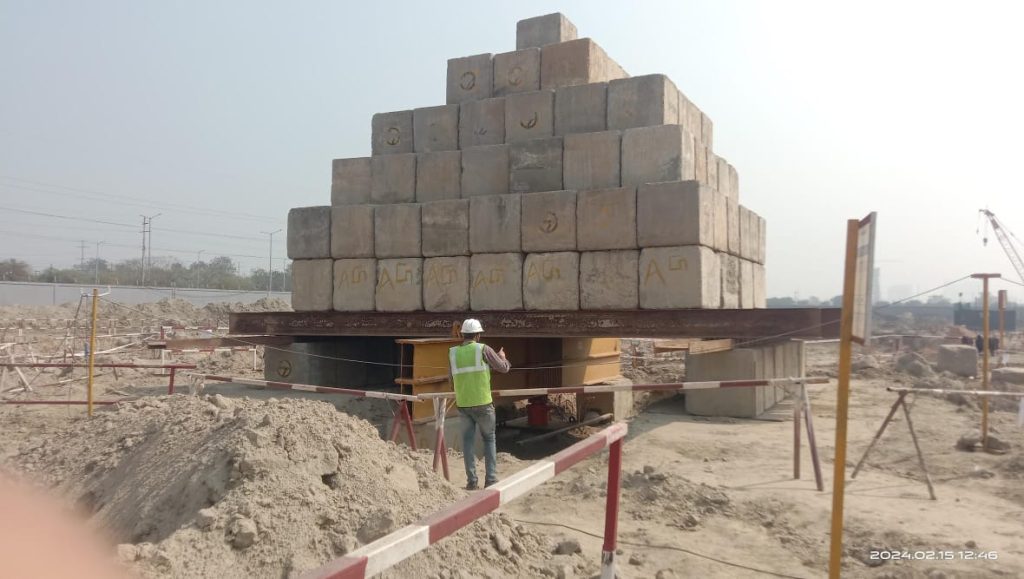
The Static Load Test is the most common, reliable, and trusted method for checking pile load capacity.
How it is performed:
- Load is applied gradually to the pile in small increments.
- At each load increment, the settlement of the pile is recorded.
- This test helps determine the maximum load the pile can safely withstand.
Advantages:
- Provides highly accurate and dependable results.
- Helps in optimizing and improving the pile design.
2. Dynamic Load Test
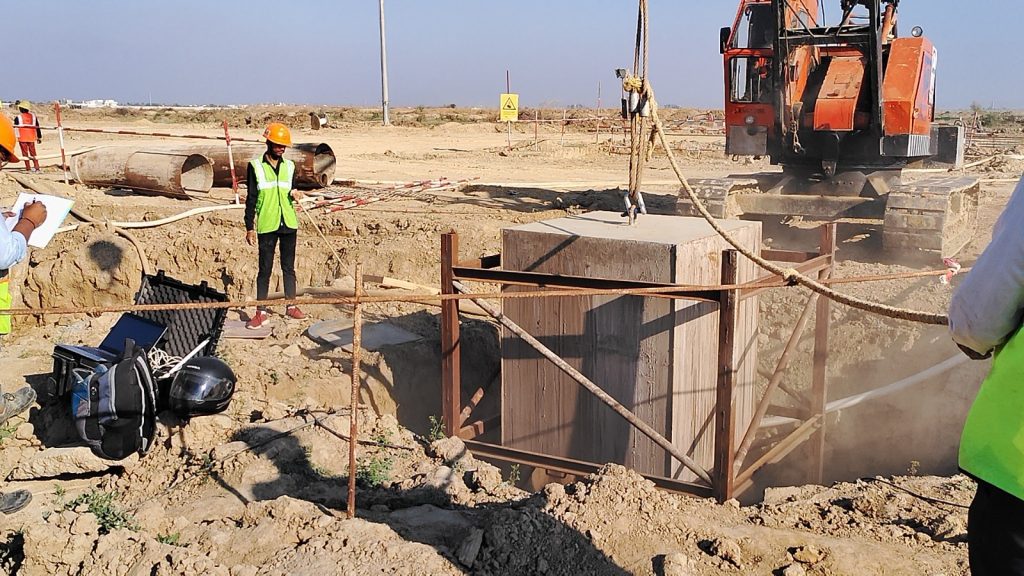
In a Dynamic Load Test, the load is applied very quickly, usually by dropping a heavy weight on the pile or using a hammer.
Advantages:
Convenient to perform during construction activities.
Faster and more economical compared to static testing.
3. Rapid Load Testing
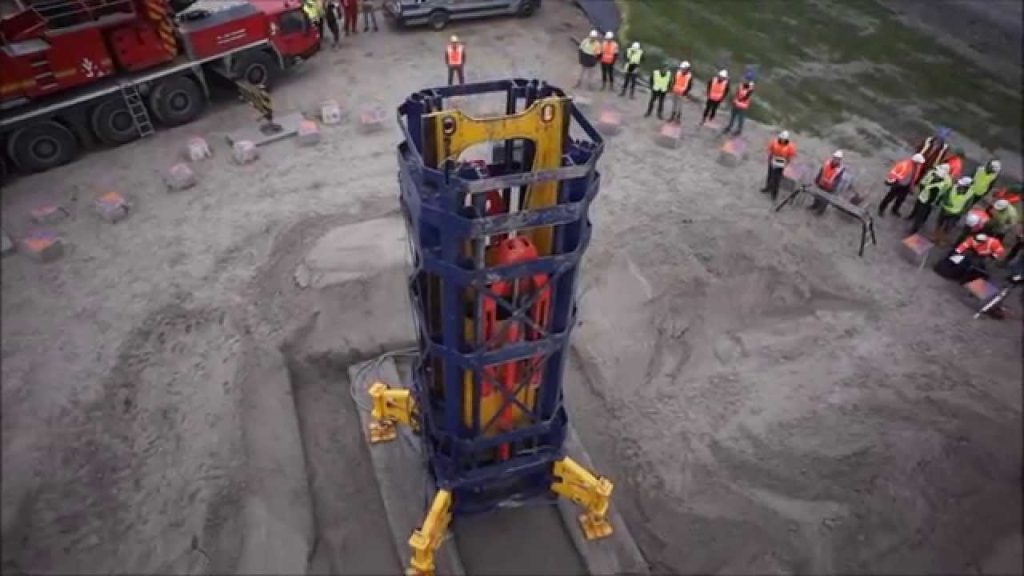
Rapid Load Testing is used to quickly assess the strength and load-bearing capacity of the soil and construction materials. It also helps check whether the soil density and conditions are suitable for the foundation.
Purpose:
- Helps in making quick decisions at the construction site.
Advantages:
- Speedy results: Testing can be completed quickly at the site.
- Easy to perform: Does not require complex laboratory equipment.
- Cost-effective: Much cheaper compared to detailed laboratory test methods.
Pile Load Testing – Purpose and Procedure
Pile Load Testing in Sonipat is performed to determine how much load a foundation pile can safely carry and how it behaves under applied loads.
The test helps identify both the safe load and the ultimate load capacity of the pile.
The testing procedure involves the following steps:
1. Site Preparation
- In this step, the soil around the pile is removed to provide proper working space.
- The pile head is cleaned, trimmed, and made perfectly level for uniform load application.
2. Test Setup
In this stage, all arrangements for applying the load and measuring settlement are made.
- A hydraulic jack is placed on top of the pile.
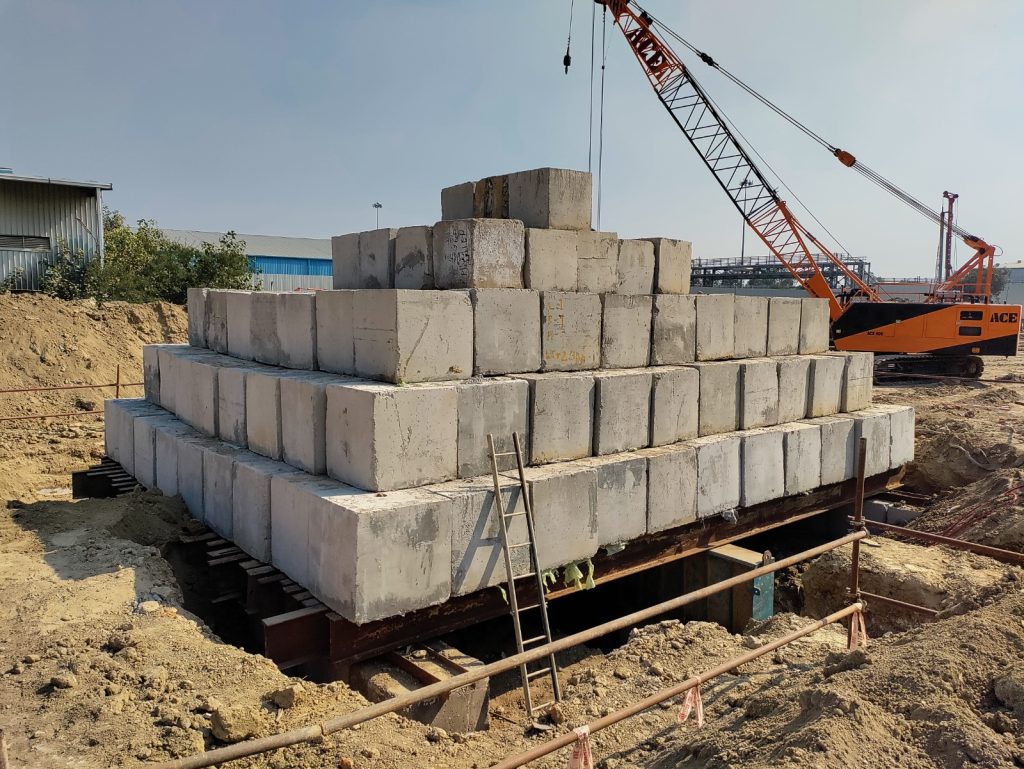
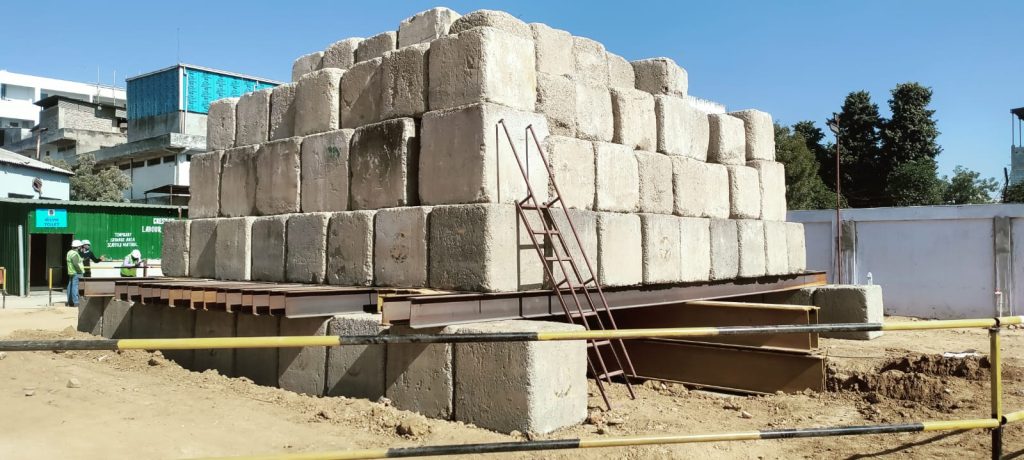
- A reaction frame or reaction beam is installed above the jack and supported by reaction piles or concrete blocks.
Measuring instruments such as dial gauges or displacement sensors are positioned to record settlement accurately.
3. Loading Procedure
- Load is applied gradually on the pile in increments.
- Load stages typically include 25%, 50%, 75%, 100% of the design load (and further increments for ultimate load tests).
- At each load stage, the settlement of the pile is recorded.
- The applied load is held until the pile settlement stabilizes.
- After reaching the final load, the load is maintained for a specified duration.
- Finally, the load is removed in the reverse order (unloading), and the rebound readings are taken.
4. Measurement & Observation
- At every load increment, settlement readings are recorded using dial gauges or digital sensors.
- A complete Load vs Settlement data sheet is prepared.
- During unloading, rebound (recovery) readings are also observed.
- The pile is visually checked for any cracks, tilting, or unusual behavior during the test.
5. Data Interpretation
Finally, it is confirmed whether the pile can safely carry the required design load.
The recorded readings are analyzed to produce the final result.
A Load vs Settlement graph is plotted.
The ultimate load capacity of the pile is determined.
The safe load is calculated by applying the required factor of safety.
The settlement limits are checked as per applicable standards.
Factors Affecting Pile Load Test Results
Pile Load Test results depend on several important factors that influence the performance of the pile during loading. The major factors are described below:
1. Soil Condition
The performance of a pile is primarily controlled by the condition of the soil surrounding it.
- Type of Soil:
Sand, clay, silt, gravel, and loose or dense soils behave differently under load. - Soil Density:
Dense or compact soil provides higher load-carrying capacity, while loose soil offers lower resistance.
Soil Strength:
Parameters such as shear strength, friction angle, and compressibility directly affect settlement and load capacity.
2. Pile Material
The quality and type of pile material significantly influence its load-carrying capacity.
- Concrete Pile:
If the concrete strength is good, the pile will perform well under load.
Poor-quality concrete or the presence of cracks reduces the pile capacity. - Steel Pile:
Capacity depends on steel quality, thickness, and corrosion condition. - Timber Pile:
The strength varies based on the quality of wood, its age, and moisture content.
3. Loading Method
The way load is applied during the test also affects the results.
- Type of Loading:
Static load, cyclic load, and dynamic load each produce different behavioral responses. - Rate of Loading:
Rapid loading may show higher settlement.
Slow loading provides more accurate and stable results. - Load Stages:
Smaller load increments result in more reliable and detailed observations. - Load Holding Time:
Load must be held at each stage to allow true settlement to occur.
4. Pile Installation Method
The method used to install the pile has a major influence on its performance.
- Driven Piles:
These compact the surrounding soil, generally increasing the pile capacity. - Bored/Drilled Piles:
If the borehole is not cleaned properly or concreting is poor, the capacity decreases. - Disturbance During Installation:
Excessive vibration or disturbance can weaken the surrounding soil.
5. Pile Size and Dimensions
- A larger-diameter pile provides more surface area and therefore higher load capacity.
- A longer pile penetrates deeper strata and develops higher skin friction.
6. Groundwater Condition
- High groundwater levels reduce effective stress and weaken the soil, lowering pile capacity.
- In clayey soils, trapped water increases settlement during loading.
7. Reaction System Stability
If the reaction beam, reaction piles, or kentledge blocks are unstable or move during the test, the readings will be inaccurate.
8. Measuring Instruments
Improperly set or misaligned dial gauges or sensors will result in incorrect settlement measurements.
Conclusion
The results of a Pile Load Test depend on several factors, including soil conditions, the quality and type of the pile material, the method of load application, and the installation procedure. When all these factors are properly managed, the test provides accurate and reliable results. However, if the soil is weak, the concrete quality is poor, the load is applied incorrectly, or the measuring instruments are not properly calibrated, the readings may be inaccurate.
Therefore, to obtain precise and dependable results, careful attention must be paid to site preparation, load application, measurement procedures, and the proper use of instruments. A correctly performed pile load test ensures that the pile can safely carry the intended load and that the structure built on it will remain stable and secure.